
Scaling content creation isn't about writing faster or hiring more people. It's about building a system that produces a consistent volume of high-quality content with predictable results. This involves defining repeatable workflows, strategically leveraging automation and AI, and creating a feedback loop to ensure your output improves over time.
What Does It Really Mean to Scale Content?
Scaling your content output is the process of increasing your volume without a proportional increase in costs, time, or decline in quality. It’s a shift from an artisanal, one-off approach—where every article is a unique project—to an operational model, like a factory, where quality and efficiency are built into the process itself.
The goal isn't just more content; it's more impact. True scale means your content engine consistently generates organic traffic and leads, even when you’re not actively managing it. This requires moving beyond simple tactics and building a robust operational framework.
The 5-Step System for Content Creation at Scale
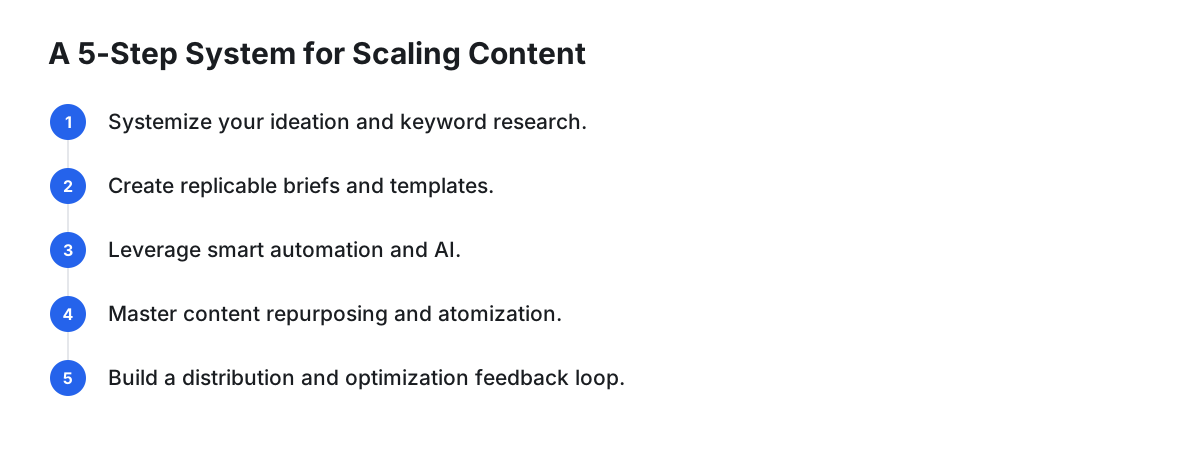
Forget disconnected tips. Scaling requires a methodical, step-by-step process. This framework breaks down how to build a content engine that runs efficiently, whether you're a solo founder or leading a marketing team.
Step 1: Systemize Your Ideation and Keyword Research
Scaling starts with your inputs. You can't build an efficient production process on a foundation of ad-hoc brainstorming. You need a reliable, data-driven way to generate a pipeline of topics that are guaranteed to have audience demand.
- Shift to Thematic Clusters: Instead of chasing individual keywords, group them into thematic clusters around core business topics. This allows you to plan and create content in batches, build topical authority with Google, and create internal linking opportunities.
- Automate Keyword Discovery: Manual keyword research is a major bottleneck. A scalable system uses tools to find opportunities based on data. For instance, PilotScribe automates this entirely by analyzing your business and competitors to find high-opportunity keywords using real search-volume data, removing the guesswork from your content strategy.
- Create a Central Idea Backlog: Use a project management tool (like Notion, Asana, or Trello) to create a central database for all potential content ideas. Each entry should include the primary keyword, estimated search volume, and a note on its strategic importance.
Step 2: Create Replicable Briefs and Templates
A detailed content brief is the single most important document for maintaining quality at scale, especially when working with freelancers, agencies, or AI tools. It's the blueprint that ensures every piece of content, regardless of who creates it, aligns with your strategy and quality standards.
A scalable content brief should include:
- Primary Target Keyword: The main search query.
- Secondary Keywords: Related terms to include.
- Target Audience: Who are you writing for? What are their pain points?
- Search Intent: Is the user looking to learn, buy, or find something specific?
- Key Questions to Answer: A list of subtopics the article must cover, often derived from the "People Also Ask" section of Google search results.
- Competitor Analysis: Links to the top 3-5 ranking articles and notes on their strengths and weaknesses.
- Required Internal Links: Specific pages on your site to link to.
- Word Count Target & Desired Tone.
Creating templates for different content formats (e.g., blog posts, case studies, landing pages) further accelerates the process. This ensures structural consistency and reduces the cognitive load for creators.
Step 3: Leverage Smart Automation and AI
Artificial intelligence has moved from a novelty to a core component of any scalable content operation. However, using it effectively means integrating it into your workflow, not just using it as a simple writing assistant.
AI can accelerate nearly every stage of the process:
- Outlining: Generate structured outlines based on your content brief.
- First Drafts: Create a solid first draft that a human editor can then refine and add expertise to.
- Editing: Check for grammar, style, and clarity.
- Visuals: Generate unique images, charts, and social media graphics.
For ultimate scale, you can move beyond using individual AI tools to adopting a fully autonomous platform. A service like PilotScribe takes automation to its logical conclusion. It isn't a tool you have to manage; it's a system that runs itself. After an initial setup, it handles the entire workflow: finding keywords, writing SEO-optimized long-form articles, and publishing them on a set schedule. This is the difference between using a power tool and having a fully automated factory.
Step 4: Master Content Repurposing and Atomization
Creating a single high-value asset and then breaking it down into dozens of smaller pieces is the ultimate efficiency hack. This "atomization" strategy maximizes the ROI on your initial production effort.
Here’s a practical example:
- Pillar Piece: A 2,000-word ultimate guide on "How to Scale Content Creation."
- Atomized Content:
- Blog Posts: Turn each of the 5 steps into its own detailed 800-word blog post.
- Social Media: Create 5-10 short text posts for LinkedIn/X with key takeaways from the guide.
- Infographic: Design a visual summary of the 5-step framework.
- Video Script: Write a script for a 5-minute YouTube video explaining the system.
- Email Newsletter: Send a summary of the guide with a link to the full piece to your subscriber list.
This approach allows one major effort to fuel your content calendar across all channels for weeks.
Step 5: Build a Distribution and Optimization Feedback Loop
Creating content at scale is pointless if it doesn't get seen or drive results. The final step is to systematize distribution and create a loop where performance data informs future content.
- Automate Publishing: Your system should publish content directly to your CMS on a consistent schedule. Platforms like PilotScribe integrate directly with WordPress, Shopify, Webflow, and Ghost, removing the manual upload and formatting steps.
- Automate Performance Monitoring: Manually checking Google Search Console rankings for hundreds of articles is not scalable. True content scaling requires an automated system that monitors performance. This is where a key differentiator comes in: PilotScribe watches how each published article ranks on Google and automatically improves those that underperform. It rewrites weak titles, refreshes fading posts, and pushes page-2 articles higher in the rankings, creating a self-improving content engine.
Choosing Your Scaling Model: In-House vs. Freelancers vs. Automation
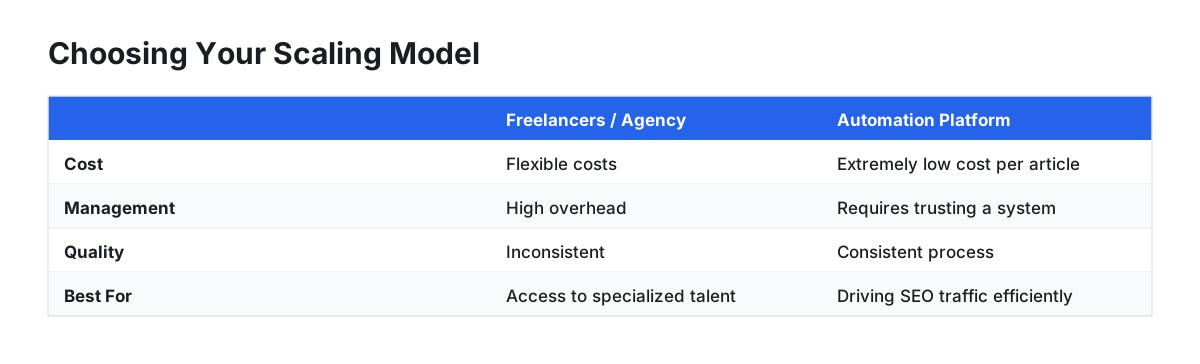
As you decide how to implement your scaling strategy, you have three primary models to choose from. Each has distinct trade-offs in cost, control, and speed.
| Model | Pros | Cons | Best For |
|---|---|---|---|
| In-House Team | Deep brand knowledge, high control over quality, fully integrated. | High fixed costs (salaries, benefits), slow to hire and scale, risk of burnout. | Large enterprises with established brands and significant budgets. |
| Freelancers/Agency | Access to specialized talent, flexible costs, faster to ramp up. | Inconsistent quality, high management overhead, less brand immersion. | Companies needing specific expertise for projects without long-term commitment. |
| Automation Platform | Extremely low cost per article, highly scalable output, consistent process. | Less suitable for nuanced, creative content; requires trusting an automated system. | Startups, SMBs, and agencies focused on driving SEO traffic efficiently. |
Managing freelancers and agencies introduces significant communication and project management overhead, which can become its own bottleneck. Hiring an in-house team is expensive and slow. For businesses focused on efficient, ROI-driven growth through SEO, a fully automated solution offers the most direct path to scale.
Discover how PilotScribe puts your entire SEO blog on autopilot and frees you from managing the content creation process.
Common Pitfalls When Scaling Your Content Output
As you ramp up production, watch out for these common failure modes that can derail your efforts:
- Quality Dilution: This is the most common trap. In the rush for quantity, quality standards slip, and content becomes generic. A strict adherence to detailed briefs and a robust editing process is the only defense.
- The Editorial Bottleneck: Often, the entire process grinds to a halt at one person's desk—usually the editor or final approver. Scaling requires distributing this responsibility or building a system with built-in checks that don't rely on a single individual.
- Ignoring Performance Data: Pumping out dozens of articles without analyzing what works is like driving with your eyes closed. A scalable system must include a mechanism for tracking rankings, traffic, and conversions to refine your strategy. If an article isn't performing, you need to know why and either improve it or stop creating similar content.
FAQ
How to create content at scale?
To create content at scale, you must build a system. This involves standardizing your processes with templates and briefs, leveraging automation and AI to handle repetitive tasks like research and drafting, repurposing large content pieces into smaller formats, and using performance data to continuously optimize your strategy.
What is the 70/20/10 rule for social media?
The 70/20/10 rule is a content strategy guideline for balancing your social media posts. 70% of your content should be proven, low-risk material that you know resonates with your audience. 20% should be new ideas based on what has worked well. The final 10% should be completely new, experimental content to test new formats and ideas.
What are the 5 pillars of content creation?
The five pillars of a successful content process are Strategy, Ideation, Creation, Distribution, and Analysis. Strategy defines your goals and audience. Ideation generates topics. Creation is the writing and production. Distribution ensures your content is seen. Analysis measures performance to inform future strategy.
Sources
- How to Scale Content Creation (Step-By-Step Guide)
- 10 Ways to Scale Content Creation with AI
- Content scaling: 8 ways to create better content, (way) faster
- Content Scaling in the Enterprise: How to Grow Your Content
- How to Scale Content Creation | Stellar
- How to Scale Content Creation: Strategies for Efficiency ...