
To grow a content platform by using SEO, you must build deep semantic topic clusters, establish an automated publishing cadence, implement structured schema markup, and continuously update decaying pages. Scaling organic traffic requires treating content as an interconnected software product—routing internal equity, monitoring search engine crawl patterns, and targeting commercial search queries that convert readers into users.
Unlike running SEO for a standard brochure website, scaling a digital publication, resource hub, or SaaS blog requires managing hundreds or thousands of interdependent URLs. Achieving durable organic growth means moving past manual, ad-hoc blogging and establishing a repeatable engineering and editorial flywheel.
What Is SEO in Digital Marketing and Content Growth?
Search engine optimization (SEO) is the discipline of structuring, authoring, and technically optimizing web pages so search engines index and rank them favorably for relevant search queries. In digital marketing, SEO functions as an organic distribution channel that converts search demand into predictable, compounding platform traffic without ongoing ad spend.
For content platforms, search traffic serves as the baseline acquisition engine. When properly structured, each newly published article strengthens the domain's topical footprint, allowing related pages across the site to climb rankings faster. Over time, this compounding effect lowers the blended customer acquisition cost (CAC) and builds a defensible organic moat that paid advertising channels cannot replicate.
1. Structure Deep Semantic Coverage with Topic Clusters
Search engines evaluate how thoroughly a domain covers a given subject before awarding top positions for high-value terms. Isolated articles rarely rank in competitive niches because search algorithms look for interconnected topical ecosystems.
To build deep subject coverage, organize your platform into deliberate hubs and spokes:
- Core Pillar Pages: Authoritative guides addressing broad, high-volume keywords (e.g., SaaS Churn Reduction or Enterprise Data Governance). These act as thematic roots for your platform.
- Subtopic Cluster Articles: Focused, long-tail guides that break down distinct facets of the pillar (e.g., Calculating Net Revenue Retention, In-App Exit Surveys, Dunning Management Strategies).
- Bidirectional Contextual Linking: Link every subtopic article back to the primary pillar using targeted, descriptive anchor text. Cross-link lateral subtopics whenever a shared concept arises naturally.
When a cluster reaches comprehensive coverage—often 15 to 30 interlinked pieces covering definitions, execution guides, templates, and tool teardowns—search engines treat the entire section as an authoritative industry reference.
2. Model Search Intent and Mine SERP Gaps
Attracting raw traffic produces vanity metrics if the visitors do not engage with your platform's core product or service. You must align your content production pipeline with explicit stages of user intent.
| Intent Category | Searcher Mindset | Representative Target Query | Strategic Platform Role |
|---|---|---|---|
| Informational | Wants conceptual answers, definitions, or steps | "how do you grow a content platform by using seo" | Top-of-funnel traffic capture; newsletter lead generation |
| Commercial Investigation | Compares platforms, tooling, or methodologies | "best headless CMS for SEO" or "Surfer vs Agility Writer" | Product positioning, feature comparison teardowns |
| Transactional | Looking to subscribe, test, or buy software | "automated blog publishing platform pricing" | Conversion capture, signup flows, trial starts |
| Navigational | Seeking a specific brand destination | "PilotScribe login" or "Google Search Console docs" | Retention, user onboarding, documentation |
Uncovering Hidden Demand via Search Console Regex
Instead of relying entirely on estimated keyword tool metrics, extract actual search demand from Google Search Console (GSC). Use custom regular expressions (regex) in GSC performance filters to find emerging search patterns:
- Question Intent Filter:
^(who|what|where|when|why|how|can|is)\sreveals questions where your platform already earns impressions but lacks dedicated answers. - Comparison and Intent Filter:
(vs|versus|best|alternative|review|pricing)isolates high-converting commercial investigation terms.
Identify queries in positions 11–25 that generate substantial impressions but low click-through rates. These indicate high-potential targets that can be elevated to page one by publishing a dedicated cluster article or expanding an existing section.
3. Implement Advanced Technical SEO and Structured Schema
Editorial quality cannot overcome indexing failures or poor crawl architecture. Content platforms must make it effortless for search engine bots and AI answer engines to parse, render, and categorize every page.
Structured Data (JSON-LD)
Implement granular schema markup sitewide. Search engine aggregators and Large Language Models (LLMs) rely on structured entities to extract direct answers for featured snippets and AI overviews:
ArticleandTechArticle: Explicitly declareauthor,publisher,datePublished,dateModified, andheadlineto establish authorship and recency signals.BreadcrumbList: Establishes site hierarchy for crawlers and improves click-through rates by displaying breadcrumbs directly in search results.CollectionPageorItemPage: Distinguishes content category hubs from single informational assets.
Crawl Audits and Log File Analysis
Use crawler tools like Screaming Frog to audit the platform regularly. Track metrics that reveal hidden indexation bottlenecks:
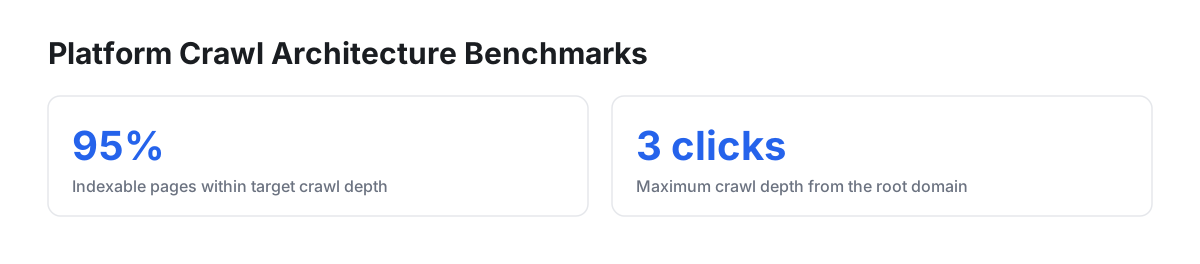
- Crawl Depth: Ensure 95% of your platform's indexable pages sit within a 3-click depth from the root domain.
- Internal Link Equity Distribution: Identify orphan pages (URLs with zero internal inbound links) and low-PageRank nodes using crawl graph visualizations.
- Server Log Monitoring: Use log analysis platforms (such as ELK Stack or Cloudflare Analytics) to monitor Googlebot response codes. If search bots spend disproportionate time crawling faceted navigation, search parameter URLs (
?sort=,?page=), or redirect loops, prune those URLs usingrobots.txtdisallow rules ornoindexdirectives to preserve your crawl budget.
4. Scale Publishing Velocity Without Editorial Decay
A content platform's indexation velocity dictates its growth trajectory. Publishing one post per month requires years to build meaningful organic market share. High-growth publications routinely publish multiple targeted articles per week to blanket target niches thoroughly.
However, manually drafting, formatting, interlinking, and publishing dozens of pieces per month creates operational bottlenecks. Automated workflows help content teams overcome these constraints without sacrificing depth or accuracy.
For example, PilotScribe automates this pipeline for founders and marketing teams. The software analyzes a website, identifies buyer-intent search queries using verified search-volume data, writes complete long-form SEO articles, and publishes them on a set weekly schedule (from 1 to 7 articles per week) directly to WordPress, Webflow, Shopify, or Ghost. Built-in editorial features—such as a 24-hour review window and support for headless stacks via a dedicated Content API and MCP agent integrations—allow platforms to scale output systematically while maintaining strict editorial quality control.
5. Earn Links Through Digital PR and Original Data Assets
Publishing high-quality content is rarely enough to outrank incumbent websites on high-difficulty keywords. Search engines still lean heavily on external backlinks to determine platform authority and trustworthiness.
Instead of manual cold outreach, scale backlink acquisition by publishing original data assets that natural citations gravitate toward:
Proprietary Benchmarks and Software Roundups
Industry writers and analysts continually search for benchmarks to cite in their articles. When PilotScribe published comparisons testing the top 11 SEO agency software platforms and analyzing more than 12 SEO automation tools, the guides served as natural citation sources for creators and agencies seeking structured software evaluations.
The Original Data Playbook
To generate recurring editorial backlinks organically:
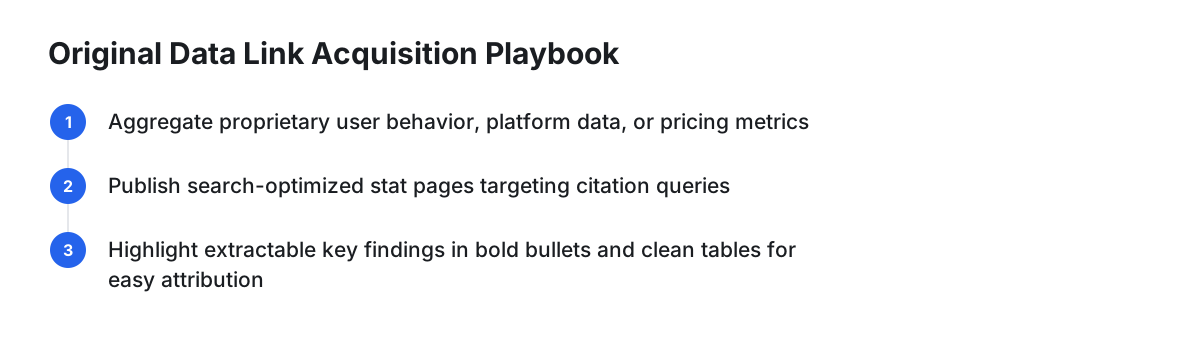
- Aggregate Unique Platform Metrics: Anonymize and aggregate proprietary user behavior, platform data, or pricing movements in your industry.
- Publish Search-Optimized Stat Pages: Title the resource explicitly around high-intent citation searches (e.g., "[Industry] Statistics and Growth Benchmarks").
- Include Extractable Key Findings: Format key findings at the top of the post in bold bullets and clean HTML tables, making it easy for external journalists and bloggers to quote your findings and attribute the backlink to your platform.
6. Combat Content Decay with Systematic Updates
Content decay is the silent killer of platform growth. As algorithms shift, competitors publish newer guides, and facts change, older posts slowly slide down the SERPs. If you publish 10 new articles a month but lose rankings on 10 older articles, your platform hits an organic traffic ceiling.
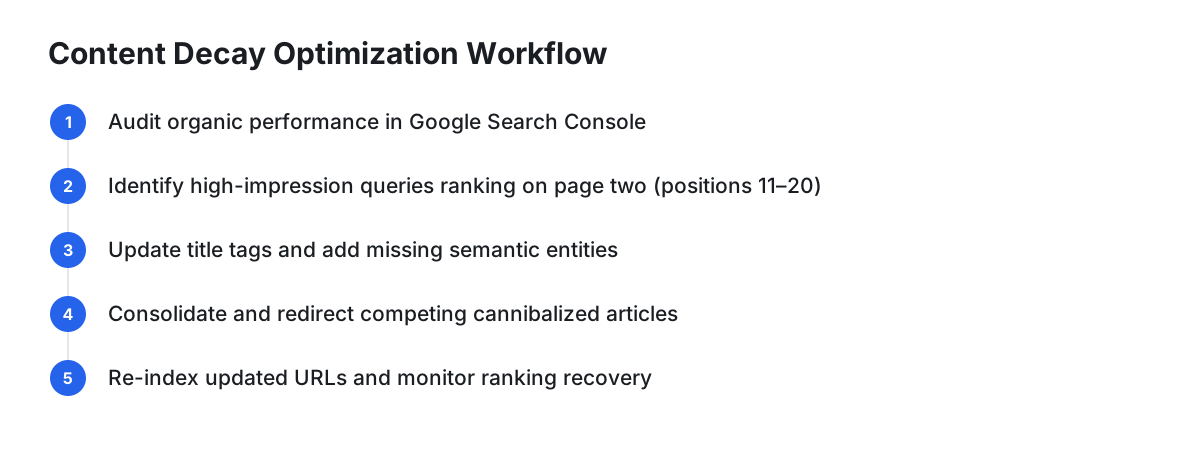
[Audit Performance via GSC]
         │
         ▼
[Identify Page-2 Queries (Positions 11–20)]
         │
         ▼
[Update Title Tags & Add Missing Semantic Entities]
         │
         ▼
[Consolidate Underperforming Duplicate Articles]
         │
         ▼
[Re-index and Monitor Rank Trajectory]
Implement an ongoing optimization workflow:
- Rewriting Underperforming Titles: Test descriptive title tags on pages with high impressions but below-average click-through rates.
- Consolidating Cannibalized Pages: When two articles compete for identical keyword clusters, merge the stronger sections into a primary URL and implement a 301 redirect from the discarded page.
- Pushing Page-2 URLs: Search engines have already validated the relevance of pages ranking between positions 11 and 20. Adding structured comparison tables, direct definitions, and missing subheadings is often all that is required to move them onto page one.
PilotScribe automates this maintenance process by monitoring article rankings on Google, rewriting weak titles, and refreshing fading posts to protect historical traffic gains.
7. Measure Platform Metrics and Citation Visibility
Evaluating platform performance requires tracking both traditional search indicators and emerging AI discovery metrics:
- Unbranded Organic Click Growth: Focus on search traffic that discovers your brand via problem-solving keywords rather than branded navigation.
- Indexation Health: Track the ratio of submitted URLs versus indexed URLs in Search Console. A widening gap signals crawl-budget waste or thin-content flags.
- LLM Engine Visibility: Track how frequently your brand and URLs appear in AI-generated answers across platforms like Google AI Overviews, Perplexity, and ChatGPT. Ensure your articles open with unambiguous, citable definitions that answer engines can easily lift and credit.
Frequently Asked Questions
Is SEO still worth it in 2026?
Yes, SEO remains one of the most cost-effective organic acquisition channels available because hundreds of millions of searchers actively seek comprehensive solutions, software comparisons, and detailed guides. While simple factual questions are increasingly answered directly within AI search overviews, buyers continue to click through to in-depth resources, original research, and actionable frameworks that AI summaries cannot replicate.
Can a beginner do SEO?
Yes, a beginner can successfully execute an SEO strategy by mastering search intent matching, clean site architecture, and helpful writing before tackling complex technical optimizations. Modern publishing tools and hosted platforms automatically manage technical foundations like mobile optimization, SSL, and sitemaps, enabling beginners to succeed simply by covering specific topics more thoroughly than competitors.
What is the 80/20 rule in SEO?
The 80/20 rule in SEO refers to the reality that roughly 80% of a platform's organic visits and conversions are typically driven by the top 20% of its published URLs. By identifying these high-performing assets in your analytics, you can prioritize them for conversion rate optimization, build secondary topic clusters around them, and continuously refresh their content to defend their rankings.
What are the 3 C's of SEO?
The 3 C's of SEO are Content, Code, and Credibility. Content covers the quality, keyword targeting, and intent satisfaction of your written material; Code refers to technical health, site architecture, fast page rendering, and structured data; and Credibility represents your off-page profile, including quality backlinks, brand citations, and digital PR mentions.