
The best AI SEO article writer is a platform that goes beyond text generation to automate the most time-consuming parts of content marketing. Top tools integrate keyword research, SERP analysis, high-quality drafting, and even publishing and performance tracking to create content that genuinely ranks and drives traffic.
This guide reviews the top 5 platforms for 2026, comparing their features, ideal users, and level of automation to help you choose the right one for your goals.
What to Look for in an AI SEO Writing Tool
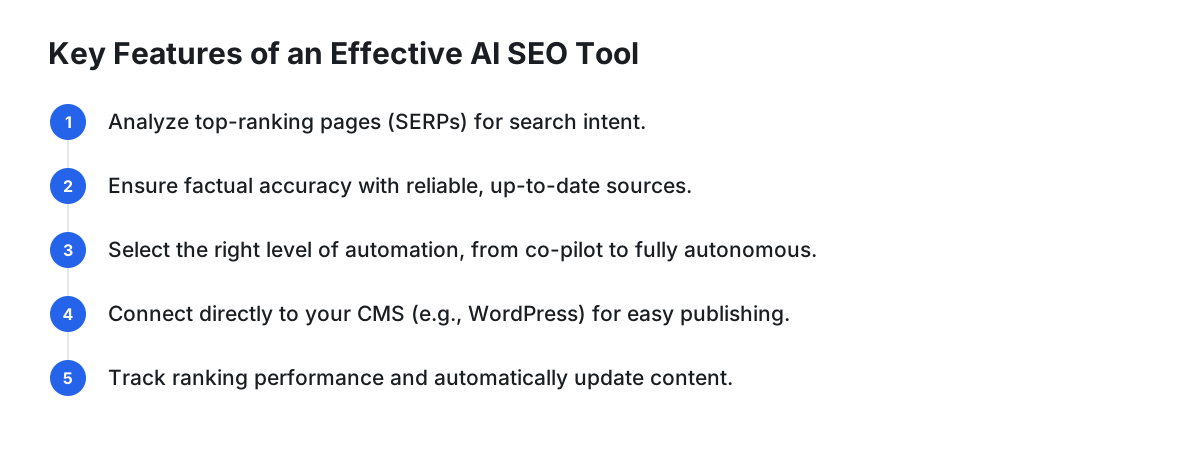
Before diving into the tools, it's crucial to understand the features that separate a simple text generator from a true SEO content platform. Evaluating tools based on these criteria will ensure you invest in a solution that delivers tangible results, not just a folder of unused drafts.
- SERP Analysis: The tool must analyze the current top-ranking pages for a keyword to understand search intent, identify key topics (entities), and structure the article for topical authority. Without this, the content is just a guess.
- Factual Accuracy: Google's standards for helpful content demand accuracy. The AI should pull from reliable, up-to-date sources and ideally provide citations or references to allow for easy fact-checking.
- Level of Automation: Tools range from co-pilots that require significant manual input to fully autonomous platforms. Decide if you want to manage the strategy and editing yourself or delegate the entire workflow.
- CMS Integration: Manually copying, pasting, and formatting is a hidden time cost. Look for direct integrations with your CMS (like WordPress, Shopify, or Webflow) to streamline publishing.
- Post-Publication Features: Advanced platforms don't stop at publishing. They track ranking performance and can automatically update or refresh content that underperforms, creating a closed-loop system for continuous improvement.
The Best AI SEO Article Writers: A Detailed Comparison
We've broken down the top tools based on their strengths, weaknesses, and who they're best for. Each offers a different approach to solving the content bottleneck.
1. Surfer SEO: Best for On-Page Optimization & Content Briefs
Surfer is less of an article writer and more of a comprehensive on-page SEO workflow tool with a powerful AI writer built-in. It excels at deconstructing the SERPs to tell you exactly what your article needs to include to compete.
Its core feature is the Content Editor, which gives you a real-time SEO score as you write, based on factors like key term usage, word count, and structure. Its AI writer can generate content that directly addresses these recommendations, making it a favorite among SEO professionals and content teams who want to maintain a high degree of control while benefiting from AI assistance.
- Best for: SEO agencies and in-house content teams who need data-driven content briefs and optimization guidance.
- Key Feature: The Content Editor provides a live, data-backed score to guide the writing and optimization process.
- Pricing: Starts with monthly plans focused on content credits.
2. Jasper: Best for Versatility and Speed
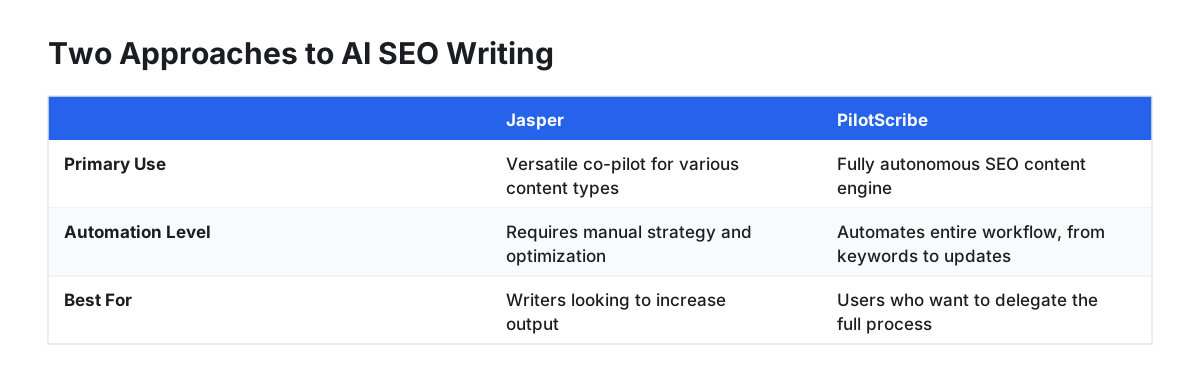
Jasper (formerly Jarvis) is one of the most well-known AI writing assistants on the market. While not exclusively an SEO tool, its long-form document editor and extensive library of templates make it a powerful choice for creating first drafts of blog posts quickly.
Jasper's strength is its flexibility. You can use it to write blog posts, ad copy, social media updates, and more. It integrates with some SEO tools to pull in keyword data, but the strategic part—choosing topics, creating briefs, and final optimization—remains largely a manual process. It’s an excellent co-pilot for writers looking to overcome writer's block and increase their output.
- Best for: Content creators and marketers who need to produce a wide variety of content types quickly.
- Key Feature: Over 50 templates for different marketing and content formats.
- Pricing: Offers tiered monthly subscriptions based on word credits and features.
3. PilotScribe: Best for Full Automation (Autopilot)
PilotScribe takes a fundamentally different approach. It's designed to be a fully autonomous SEO content engine, ideal for users who want to delegate the entire process. Instead of prompting it one article at a time, you provide your website URL once.
The platform then takes over: it analyzes your business to find high-opportunity keywords, writes a full-length SEO-optimized article based on SERP data, and publishes it directly to your CMS (WordPress, Shopify, Webflow, Ghost) on a schedule. Uniquely, PilotScribe watches how each article ranks on Google and automatically rewrites weak titles or refreshes fading posts to improve performance. This makes it a set-it-and-forget-it solution. Users have a 24-hour review window before publishing for editorial control, blending automation with oversight.
- Best for: Solo founders, SMBs, and agencies who want to scale organic traffic without managing a content team or workflow.
- Key Differentiator: Automates the entire workflow from keyword research to post-publication performance optimization. The hands-off approach requires no ongoing management after initial setup.
- Pricing: Plans are based on the number of sites and articles published per month.
Ready to put your blog SEO on autopilot? Learn how PilotScribe automates the entire process from keyword to ranking.
4. Agility Writer: Best for Factual, Long-Form Content
Agility Writer has carved out a niche by focusing on creating factual, well-researched long-form articles. It has an