
SEO autopilot refers to using software to automate critical search engine optimization tasks, from keyword research and content creation to publishing and performance monitoring. The goal is to generate consistent organic traffic with minimal ongoing manual effort, shifting the focus from tedious execution to high-level strategy.
What Does "SEO on Autopilot" Really Mean?
"SEO on autopilot" means using a system to handle the repetitive, time-consuming tasks required to rank on Google. It's not a single magic button but a strategic application of technology to streamline workflows. Historically, this term was associated with risky, automated software. Today, it more accurately describes sophisticated AI-powered platforms that manage specific parts of an SEO strategy.
A complete SEO strategy can be broken into three core areas, each with its own potential for automation:
- Content SEO: This involves everything from finding what to write about to creating and publishing the articles. Automation here focuses on generating high-quality, relevant content at scale.
- Technical SEO: This covers the health of your website—site speed, mobile-friendliness, and crawlability. Tools automate monitoring for errors, tracking rankings, and analyzing site structure.
- Off-Page SEO (Backlinks): This is the practice of earning links from other websites to build your site's authority. This area is where automation has the most notorious reputation.
The key is understanding that modern, effective automation focuses on scaling high-quality work, not just creating low-quality assets in bulk.
The Two Schools of SEO Autopilot Software: Content vs. Links
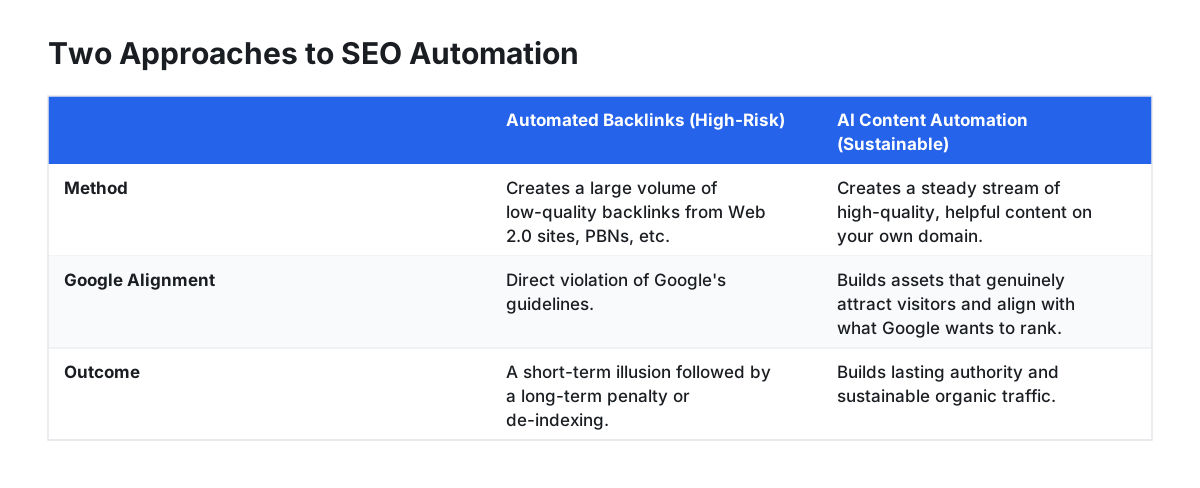
When you search for "SEO autopilot software," you'll find tools that fall into two very different camps. One represents the past of SEO automation—a high-risk game of shortcuts. The other represents the future—a sustainable strategy powered by AI.
School 1: Automated Backlink Builders (The High-Risk Approach)
This is the old guard of SEO automation. Tools in this category, like GSA Search Engine Ranker, SEO Neo, or the similarly-named seo-autopilot.eu, are designed to create a large volume of backlinks automatically. They work by posting comments, creating profiles, and publishing content to thousands of Web 2.0 sites, article directories, and private blog networks (PBNs).
The promise is a fast way to build authority. The reality is often a short-term illusion followed by a long-term penalty. Google's algorithms are exceptionally good at identifying and devaluing these kinds of manufactured, low-quality links. Using this software is a direct violation of Google's guidelines and can get your site removed from search results entirely.
School 2: AI-Powered Content Automation (The Sustainable Approach)
This is the modern, white-hat approach to SEO on autopilot. These platforms focus on the most challenging and impactful part of SEO: creating a steady stream of high-quality, helpful content. Instead of building risky links, they build a library of assets that genuinely attract visitors and earn rankings on their own merit.
Platforms like PilotScribe, Ranklytics, and RobotSpeed operate in this category. They automate the entire content lifecycle, from planning to publishing, but do so by creating valuable assets on your own domain. This method builds lasting authority and traffic by creating real value for users, which is exactly what Google wants to rank.
Comparing the Top AI Content Automation Platforms
While several platforms claim to put SEO on autopilot, they differ significantly in their approach, features, and ideal user. Here’s a breakdown of the leading options in the modern, content-focused category.
| Feature | PilotScribe | Ranklytics | RobotSpeed |
|---|---|---|---|
| Core Approach | Fully autonomous content strategy and creation from a single URL. | Customizable workflow automation for entire SEO operations. | Fixed-volume content production and publishing. |
| Key Differentiator | Set-and-forget setup; requires no keyword research or content planning from the user. | Granular control over building and connecting independent SEO workflows (content, monitoring, etc.). | Delivers a set number of articles per month for a flat fee. |
| Ideal User | Solo founders, SMBs, and agencies wanting a hands-off solution for client sites. | SEO professionals and agencies that require deep customization and control over their processes. | Marketers and businesses focused on content velocity and a predictable output. |
| Technical Setup | Paste a website URL. No plugins or code required. | Workflow builder with integrations for various data sources and tools. | Standard SaaS onboarding and CMS connection. |
| Pricing Model | Tiered plans based on the number of sites and articles per week. | Custom pricing based on workflow complexity and usage. | Flat-rate monthly subscription (e.g., "30 articles/month"). |
How Modern AI Puts Your Blog SEO on Autopilot: The Methodology
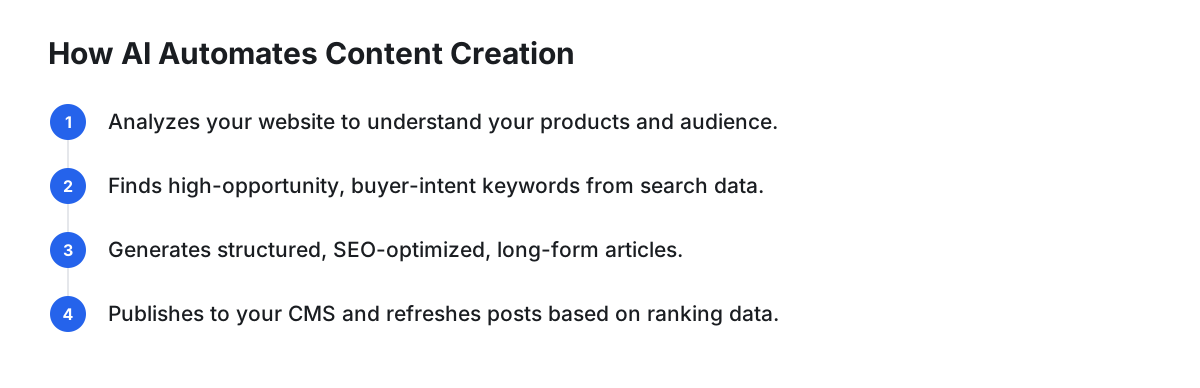
Modern AI platforms don't just guess what to write. They follow a sophisticated, data-driven methodology to replicate the work of an entire SEO content team. Here’s a look under the hood, using PilotScribe's process as a concrete example of how these systems operate:
Business & Audience Analysis: The process starts with deep analysis of your actual website. The AI reads your site to understand what is sold and to whom, mapping out your products, services, and value propositions. This initial step is crucial for ensuring the content strategy is commercially relevant.
Data-Driven Opportunity Finding: Instead of manual keyword research, the system automates query selection. It connects to real-time search data sources (like DataForSEO) to find high-opportunity keywords. The focus is specifically on targeting real buyer-intent searches that bring converting visitors, not just vanity traffic.
Structured, SEO-Optimized Writing: The AI generates complete, long-form articles. This goes beyond basic text generation; it includes creating an optimized structure (headings, lists), incorporating target keywords naturally, and writing a compelling title. The goal is a publish-ready draft that satisfies both search engines and human readers.
Integrated Publishing & Performance-Based Refreshing: True automation closes the loop by publishing the content. Systems connect directly to your CMS (e.g., WordPress, Shopify, Webflow) and publish on a set schedule. The most advanced platforms also integrate with Google Search Console to monitor performance. For example, PilotScribe rewrites weak titles, refreshes fading posts, and pushes page-2 articles up based on Google ranking performance, turning content into a dynamic asset that improves over time.
For developers and agencies, some platforms offer even deeper integration. PilotScribe's MCP (AI agent) server allows AI agents to directly connect and perform all in-app functions, from site configuration to article publication, offering a powerful way to manage dozens of client sites programmatically.
Getting Started: A 5-Step Automated Content Strategy
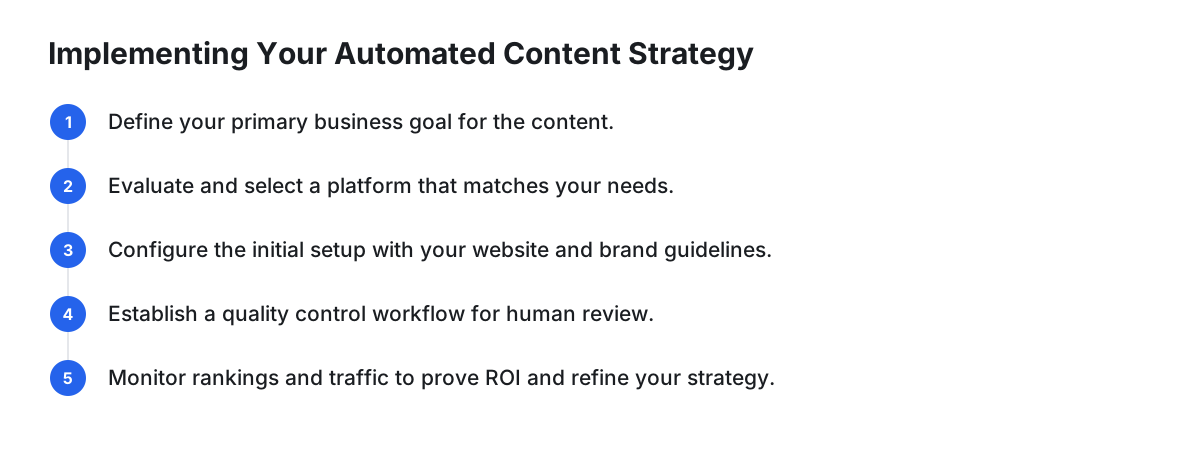
Implementing an SEO autopilot strategy requires more than just picking a tool. Following a platform-agnostic process ensures you get the best results.
Define Your Goals: What is the primary objective of your content? Is it lead generation, direct sales, or brand awareness? Your goal will dictate the type of buyer-intent keywords your automation platform should target.
Evaluate and Select a Platform: Use the comparison table above as a guide. Are you a founder who needs a completely hands-off solution (like PilotScribe)? Or an SEO expert who wants to build custom workflows (like Ranklytics)? Choose the tool that matches your resources and need for control.
Configure the Initial Setup: This is your one chance to give the AI the right inputs. Connect your website, integrate your Google Search Console account, and provide any brand voice or negative keyword guidelines the platform allows. The better the initial input, the better the automated output.
Establish a Quality Control Workflow: Even with advanced AI, a human review is valuable. Use platforms that offer a review window (e.g., a 24-hour hold before publishing). This allows you to catch any errors, add a unique insight, or tweak the tone before an article goes live. It's the perfect blend of AI speed and human expertise.
Monitor Performance: Track the rankings and traffic for your automatically generated posts. This will not only prove ROI but also help you refine your strategy. If certain topics perform exceptionally well, you may want to double down on that category.
For businesses ready to implement a true set-and-forget content engine, PilotScribe offers the most direct path from URL to published, ranking content. See how PilotScribe puts your blog on autopilot.
FAQ
What is the best SEO autopilot software?
The best SEO autopilot software depends on your specific needs. For founders and SMBs wanting a fully autonomous, hands-off system, PilotScribe is a top choice due to its URL-only setup. For agencies needing deep customization to build their own workflows, Ranklytics is a powerful option. For those prioritizing a fixed volume of content at a flat rate, RobotSpeed is a strong contender.
Does automatic backlink software still work?
No, automated low-quality backlink building is an outdated and high-risk SEO tactic. Google's algorithms are highly effective at identifying and penalizing sites that use these schemes. This practice can lead to a severe drop in rankings or even complete removal from the search results.
Can AI completely automate SEO?
AI can fully automate the entire SEO content workflow, including business analysis, keyword selection, article writing, and publishing. While it can handle the execution flawlessly, human oversight for high-level strategy and final content approval remains a valuable part of the process for ensuring brand alignment.
Is SEO autopilot software safe to use?
It depends entirely on the type of software. AI content automation platforms that create original, helpful content (like PilotScribe, Ranklytics) are perfectly safe and align with Google's guidelines. In contrast, automated backlink software is unsafe and violates Google's policies, putting your website at significant risk.